
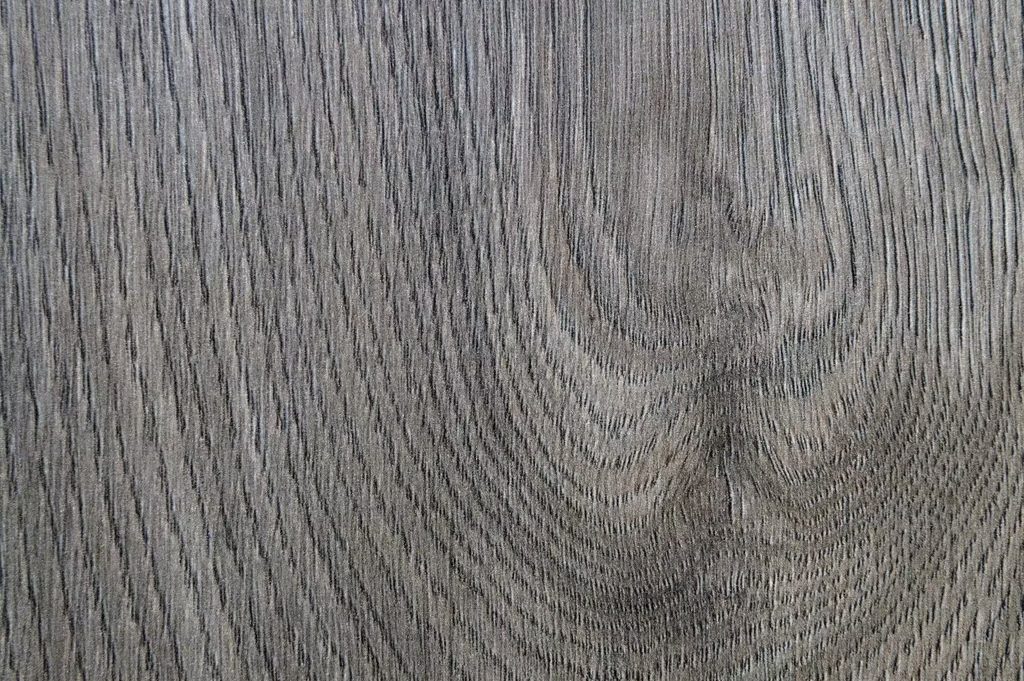
Oak flooring that has been stained black by pet urine presents one of the most challenging refinishing scenarios in residential wood flooring. The black discoloration, known as ebonizing, occurs when ammonia in urine reacts with the natural tannins present in oak and other. This chemical reaction penetrates deep into the wood fibers, often making conventional sanding insufficient for complete stain removal. Understanding the chemistry involved and the available remediation options is essential for anyone facing this problem.
The Chemistry of Ebonizing
Ammonia is a strong alkali that reacts with tannic acid in wood to form dark-colored tannate compounds. Oak is particularly susceptible because it contains high concentrations of tannins — the same compounds that give. When ammonia comes into contact with oak, the reaction produces a range of dark brown to black compounds that can extend several millimeters into the wood surface.
Not all pet urine stains are created equal. The severity of the discoloration depends on several.
Duration of exposure: Urine that is cleaned up within minutes causes far less damage than stains that remain wet for hours or daysQuality of the original finish: A well-maintained polyurethane or varnish finish provides a barrier that prevents urine from reaching the wood. Scratched, wornInsulating A Tight Spot How
Wood species and grain orientation: Oak’s open grain structure allows liquids to penetrate more readily than closed-grain woods like mapleWhy Miter Joints Open Up Understanding Wood Movement And Prevention Strategies. Quarter-sawn oak, with its tighter grain pattern, resists penetration slightly better than plain-sawn oak.
Varnish finish provides a barrier that prevents urine from reaching the wood. Scratched, worn, or failed finishes allow moisture to penetrate. In the case of carpeted floors, any imperfection in the finish — even microscopic scratches from carpet pad friction — provides an entry point.
Wood species and grain orientation: Oak’s open grain structure allows liquids to penetrate more readily than closed-grain woods like maple. Quarter-sawn oak, with its tighter grain pattern, resists penetration slightly better than plain-sawn oak.
Number of incidents: Repeated exposure creates cumulative damage. Each incident pushes stain compounds deeper into the wood, while the absorbed moisture can cause secondary issues like cupping, crowning, or delamination of the floorboards.
Chemical Remediation: The Oxalic Acid Approach
For stains that have penetrated beyond sanding depth, chemical treatment offers the best chance of restoration. Oxalic acid, a mild organic acid found naturally in many plants, is the most effective chemical for treating ammonia-based wood stains. It works by breaking down the dark tannate compounds into soluble, colorless products that can be rinsed away.
Application procedure for oxalic acid treatment:
- Test a hidden area first. Mix oxalic acid crystals with hot water at a ratio of approximately 12 ounces per gallon. Apply to the stained area and observe the lightening effect over 10 to 30 minutes.
- Sand to bare wood. Remove all existing finish in the affected area using a belt sander or floor edger. Begin with 36-grit or 60-grit paper and progress to 100-grit. Thorough sanding is essential because the acid cannot penetrate through existing finish.
- Apply the oxalic acid solution. Using a natural bristle brush or sponge, apply the solution liberally to the stained area. Keep the surface wet for 20 to 30 minutes. The stain should visibly lighten during this period. For stubborn stains, a second application may be necessary.
- Neutralize and rinse. After the stain has lightened sufficiently, neutralize the acid with a solution of one tablespoon baking soda per quart of water. Rinse thoroughly with clean water and allow to dry for at least 48 hours.
- Assess the results. Some improvement is typical, but complete stain removal is not guaranteed. If the stain persists after two acid treatments, the affected boards may need to be replaced.
| Wood Species | Tannin Content | Susceptibility to Ebonizing | Sanding Depth Needed |
|---|---|---|---|
| Red Oak | High (2-8% by weight) | Very high | 1/16 to 1/8 inch |
| White Oak | Moderate-high | High | 1/16 inch or more |
| Mahogany | High | High | Similar to oak |
| Maple | Low | Low | Minimal |
| Pine/Fir | Low | Low | Minimal |
| Treatment Method | Effectiveness | Labor Required | Risk of Damage | Cost |
|---|---|---|---|---|
| Sanding only (surface stains) | High for shallow stains | Moderate | Low | Low |
| Oxalic acid treatment | Moderate-high | High | Low (when neutralized) | Low |
| Chlorine bleach (sodium hypochlorite) | Low-moderate | Moderate | Moderate (can lighten wood unevenly) | Low |
| Hydrogen peroxide + ammonia (two-part bleach) | High | High | High (can damage wood fibers) | Moderate |
| Board replacement | Complete | Very high | Low (if done carefully) | High |
| Dark stain over entire floor | Cosmetic only | Moderate | Low | Moderate |
Sanding Considerations for Deep Stains
Solid oak flooring typically has 3/4 inch of wear material, providing ample depth for aggressive sanding. However, engineered oak flooring and thin veneer products may have as little as 1/8 inch of solid wood above the plywood core. Before attempting any refinishing, determine the flooring type and remaining wear layer thickness.
For solid 3/4-inch oak strip flooring, a floor sander can typically remove 1/16 to 1/8 inch of material in a normal refinishing pass. If stains extend deeper than this, chemical treatment becomes the primary option. Drum sanders and orbital floor sanders are the standard tools, with edgers used for perimeter areas where the large sander cannot reach.
One critical detail: sanding only the affected area will leave a depression in the floor surface. If chemical treatment fails and the stain requires deep sanding, the entire room should be sanded to a uniform depth to maintain a level surface.
When Replacement Is the Better Option
In some cases, board replacement is the most practical solution. This applies when:
- The stain penetrated through the full thickness of the wear layer
- The floorboards have structural damage from moisture (cupping, rotting, delamination)
- Multiple closely spaced stains make patching impractical
- The floor is engineered or thin veneer with insufficient sanding depth
- Chemical treatments have been tried and failed
Individual board replacement requires careful cutting, fitting, and finishing to match the surrounding floor. In a room with existing pet damage, replacement boards may need to be artificially aged or the entire floor refinished afterward to achieve a uniform appearance.
Alternative Approach: Intentional Dark Staining
When stain removal is impossible, intentional dark staining offers a practical alternative. By applying a dark stain to the entire floor, the black pet stains become part of a uniform dark surface rather than isolated defects. This approach works well with dark espresso, walnut, or charcoal-tinted finishes. The floor refinisher applies stain to the bare sanded wood, then applies multiple coats of polyurethane or other durable finish.
While this does not restore the original light oak appearance, it produces a serviceable floor that avoids the expense and labor of board replacement. For homeowners planning to sell the property, this is often the most cost-effective solution.
Long-Term Prevention
Once the floor is restored, preventing recurrence requires attention to both the floor finish and the pet. A high-quality satin or semi-gloss polyurethane finish provides the best moisture barrier. Area rugs in high-traffic pet zones offer additional protection but must be lifted regularly to prevent moisture trapping. Prompt cleanup of accidents and proper pet training remain the most effective prevention strategies.
The Chemistry of Oxalic Acid Treatment
Oxalic acid (C2H2O4) is a dicarboxylic acid that occurs naturally in many plants including rhubarb, spinach, and sorrel. For wood restoration, it functions as a reducing agent and chelating compound. When applied to tannin stains, oxalic acid reacts with the dark-colored iron tannate or ammonia tannate compounds to form colorless, water-soluble products that can be rinsed away.
The reaction mechanism involves the acid donating hydrogen ions to break the molecular bonds between the metal ion (in the case of iron stains) or the ammonia compound and the tannin molecule. The resulting colorless products are then soluble in water and are removed during the rinsing and neutralizing steps. This chemical specificity means oxalic acid is effective on tannin-based stains but has limited effect on stains from other sources such as ink, paint, or synthetic dyes.
The concentration of the oxalic acid solution affects both effectiveness and safety. A 5 to 10 percent solution by weight (approximately 6 to 12 ounces per gallon of hot water) is the standard effective range. Higher concentrations increase the risk of wood surface damage, while lower concentrations may require multiple applications. Hot water enhances solubility and reaction rate, but the solution should not be boiling, as excessive heat can damage the wood or cause the acid to decompose.
| Application Temperature | Dwell Time | Stain Removal Rate | Wood Damage Risk |
|---|---|---|---|
| Cold (50-70°F) | 45-60 minutes | Slow | Very low |
| Warm (70-120°F) | 20-30 minutes | Moderate | Low |
| Hot (120-160°F) | 10-20 minutes | Fast | Moderate |
| Very hot (above 160°F) | 5-10 minutes | Very fast | High |
Tools Required for Floor Refinishing
Refinishing a pet-stained oak floor requires specific equipment beyond basic sanding tools. A drum sander or orbital floor sander removes the bulk of the old finish and surface wood. An edger reaches areas the large sander cannot access, typically within 4 to 6 inches of each wall. A detail sander or hand sanding block addresses corners and tight spaces.
Abrasive progression is critical for achieving a smooth final surface. Begin with 36- or 40-grit for aggressive material removal on the initial pass. Progress to 60-grit, then 80-grit, and finish with 100- or 120-grit for the final sanding pass. Jumping more than one grit size between passes leaves scratches that require additional work to remove.
For chemical treatment, natural bristle brushes (nylon or polyester) are preferred over foam brushes, which can break down in acid solutions. Plastic or stainless steel containers are required for mixing — oxalic acid will corrode carbon steel, copper, and aluminum. Safety equipment includes chemical-resistant gloves, safety goggles, and a respirator rated for acid vapors.
Working with Engineered and Thin-Veneer Floors
Engineered oak flooring presents additional challenges for stain removal. The wear layer on most engineered products ranges from 2mm to 6mm (approximately 1/16 to 1/4 inch). Once this thin layer is sanded through, the plywood or HDF core is exposed, which cannot be refinished to match the surrounding oak surface.
For engineered floors with deep stains, chemical treatment is often the only option before considering replacement. The oxalic acid procedure is the same as for solid flooring, but the drying time after chemical treatment is critical — engineered flooring is more susceptible to delamination if moisture penetrates the edge joints. Accelerate drying with fans and dehumidifiers after rinsing.
Some high-end engineered floors have wear layers of 4mm or more, allowing for one or two refinishing cycles in their lifetime. Always verify the wear layer thickness with the manufacturer before attempting sanding. If the wear layer is unknown, start sanding in an inconspicuous area, such as inside a closet, to determine the available depth.
Matching New Boards to Existing Flooring
When board replacement is necessary, matching the new wood to the old requires attention to several variables. Oak species varies between red oak (Quercus rubra) and white oak (Quercus alba), which have different grain patterns and color tones. Within each species, plain-sawn, quarter-sawn, and rift-sawn boards have distinct grain appearances.
New oak boards should be acclimated to the room’s humidity for at least two weeks before installation. After cutting and fitting, the new boards must be stained to match the surrounding floor. This is a trial-and-error process that typically requires blending two or more stain colors to achieve an exact match. Apply test stains to scrap pieces of the same flooring material, let them dry completely, and evaluate under both natural and artificial lighting before final application.