
A schedule of values (SOV) is a comprehensive documented list of each construction task that constitutes a construction project, along with their payment values. SOV is a standard practice followed by contractors to bill the clients.
An SOV lists out all individual costs in contract price from the start to the finish of the project. It is an essential tool for managing cash flows, especially for larger commercial construction projects.
This article discusses the features and benefits of SOVs in construction projects.
Features of Schedule of Values (SOV) in Construction
- SOVs list the value and cost of every billable work item in a chronological order of the project timeline, along with their progress percentage.
- SOVs are used by general contractors, subcontractors, property owners, construction managers, and all the other stakeholders in a construction project.
- The contractor prepares SOV before the beginning of the construction project. The rates per item of work and the duration are assigned to perform the job. The construction commences only when this SOV is agreed upon by all parties (subcontractors and clients), and signed as a part of the contract.
- An SOV document shows the works in progress and the work that is completed. The payment is released to the contractors based on the completion status on the SOV document.
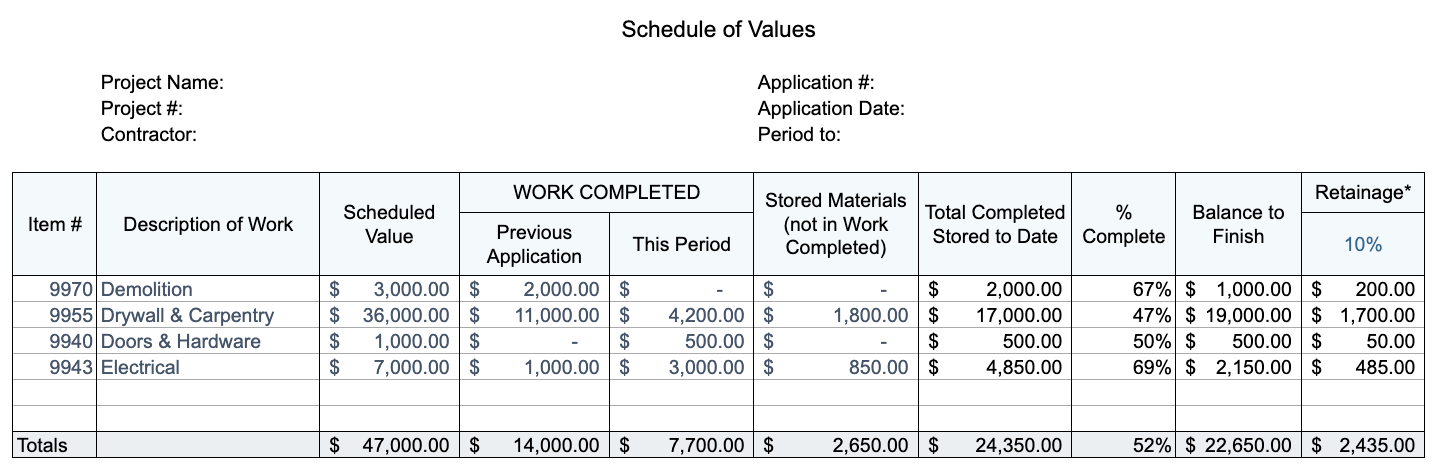
- The items that an SOV must include are:
- Item number
- Item descriptor or description of work: For example, plumbing
- Item value or scheduled value: For example, $5000
- Amount previously billed: Some contractors are paid for the percentage of work completed instead of a lumpsum amount. For example, if plumbing works are 20% finished, and the estimated value is $5000, then $1000 is added to this column once the contractor receives the payment.
- Amount billed this period: This column specifies how much work the contractors have completed since the last payment. After paying the contractors, this column resets to $0 and adds the previous value to the “Amount Previously Billed” column.
- Amount of stored materials: Include the cost of any construction materials purchased before officially beginning the construction.
- Total Value: It is the sum of previous three columns
- Percentage complete: It is the quotient of Total Value divided by Scheduled Value.
- Balance to finish or amount remaining
- Retention cost or retainage
Benefits of Schedule of Values (SOV) in Construction
- SOVs in large construction projects help oversee the progress and effectively manage contract payment applications.
- It allows the project owner to track the percentage of project completed and how much more they need to pay the contractors.
- SOVs describe the proper order of work completion and their costs which help increase accountability and trust.
- SOVs are shared with everyone involved in the project which helps them understand their individual goals and expectations.
There is no standard format for an SOV form. The construction professional is free to structure an SOV form that best suits the type of project and requirements.
FAQs
A schedule of values (SOV) is a comprehensive documented list of each construction task that constitutes a construction project, along with their payment values.
The benefits of SOV in construction are:
1. It help oversee the progress and effectively manage contract payment applications.
2. It allows the project owner to track the percentage of project completed and how much more they need to pay the contractors.
3. It help increase accountability and trust.
There is no standard format for an SOV form. The construction professional is free to structure an SOV form that best suits the type of project and requirements.
Read More
What is Snagging in Construction?